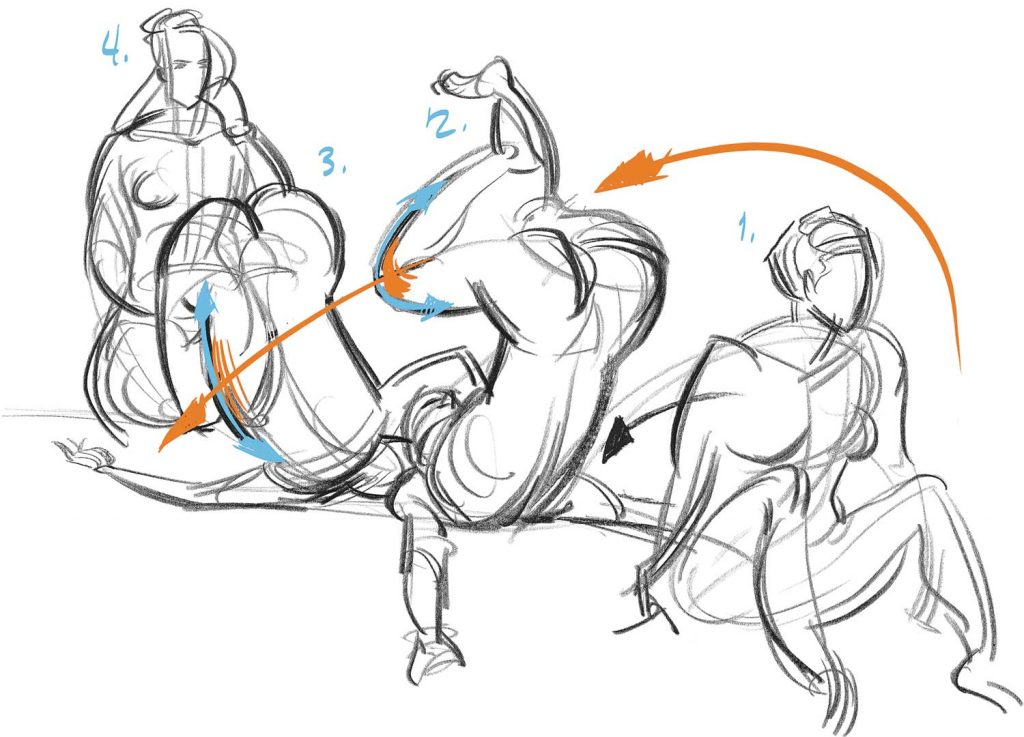
Animation Mentor: Can you tell us about FORCE Drawing? Where did the concept come from?Mike Mattesi: My personal love of film, comics and entertainment inspired me to draw excitement and drama! This interest connected me to the teachers I had and the career path that lead to FORCE. FORCE evolved from a combination of many things starting with my mentors—they shaped my thoughts and skills and taught me to see and think about the world around me.
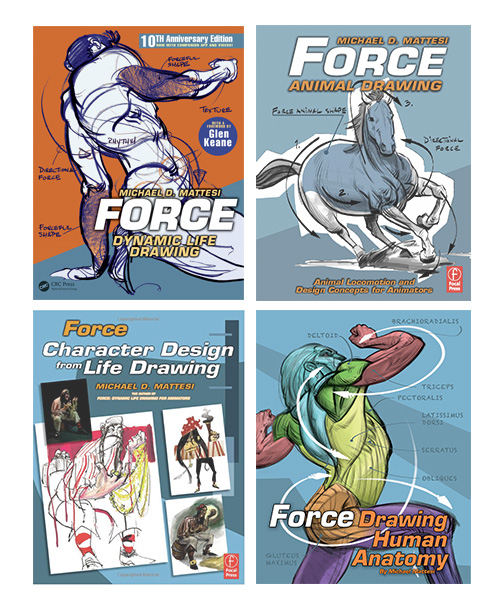
Mike’s FORCE Drawing Books
Then, my experience in 2D animation at Walt Disney Animation presented me with drawings moving and acting over time. Finally, I taught drawing for about a decade, experimenting with how to approach FORCE drawing. I created a system for it and experimented across many classes until it all worked.
AM: What type of drawing skills would benefit a 3D animator?MM: I think of drawing as a language, a way of seeing and thinking about the world, and I believe this serves everyone! Specifically for 3D animators, seeing and understanding the abstraction of FORCE is extremely helpful for animating. Drawing FORCES creates an opportunity to understand and plan the actions of characters to generate great performances. It allows you to see these actions in abstract terms instead of getting mired in the details.
Drawing FORCES creates an opportunity to understand and plan the actions of characters to generate great performances. It allows you to see these actions in abstract terms instead of getting mired in the details.
AM: Do you have any tips for building those skills?MM: Become an observer of life and study it, be curious about it—the physics of the world combined with the drama of human existence. Why do we do the things we do and act the way we do? Discover the answers and use them in your work.
AM: What is the most common misconception people have about drawing? How can they overcome it?MM: Most people think they do not have the talent to draw. Anyone can draw! First try blind drawing: draw while looking at your subject, not the paper, and align your eyes, mind, and hand. Be patient, take your time, and do not worry about the outcome of the drawing but instead the exercise of tying the prior three elements together into one. In time, you will learn to see, then you can look back at the page. The first step is training your mind to accept what you can see with your eyes.
The first step is training your mind to accept what you can see with your eyes.
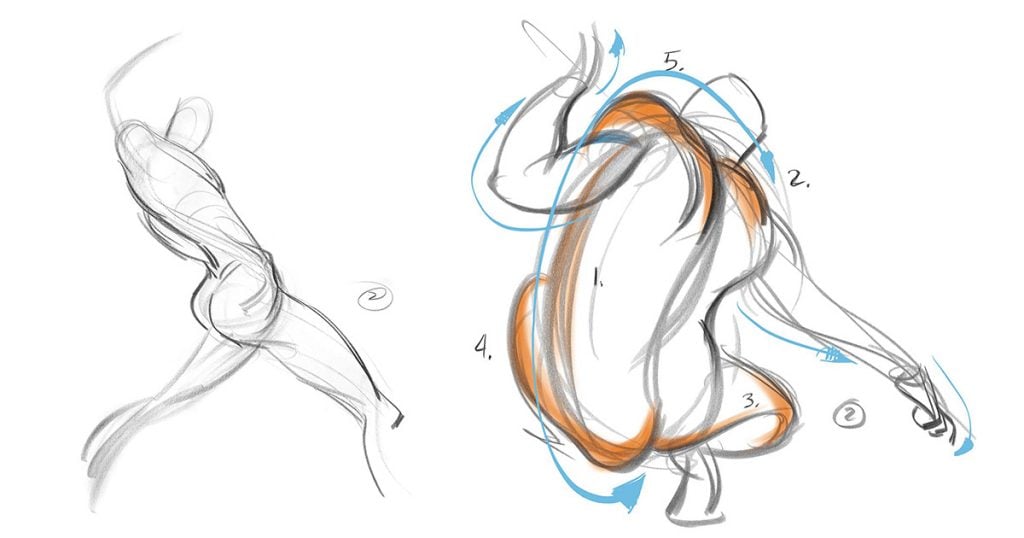
Expressive figures drawn by Mike
AM: What’s your favorite animated movie that you’ve worked on?MM: I worked on one film, The Lion King, when it comes to films. I also worked on many advertisements, TV show openings, and video games…lots of video games. Not to mention, three of my own businesses and five books. Curious to see what the next ten years hold. 😉
Designed for artists of all levels, from beginning storyboarders, to intermediate modelers, to advanced animators, our workshops offer new skills for everyone!
To start, check out 2D Animation for Beginners taught by Disney veteran Jay Jackson, or Storyboarding Fundamentals with the talented Mike Kunkel.
https://youtu.be/vTOgdlHfceU In this tutorial, Animation Mentor graduate Nathaniel Seymour explores how to animate clear emotion and storytelling without dialogue. Using his simple “Imp Rock” character and a giant flower, he demonstrates how gestures, facial shapes,...
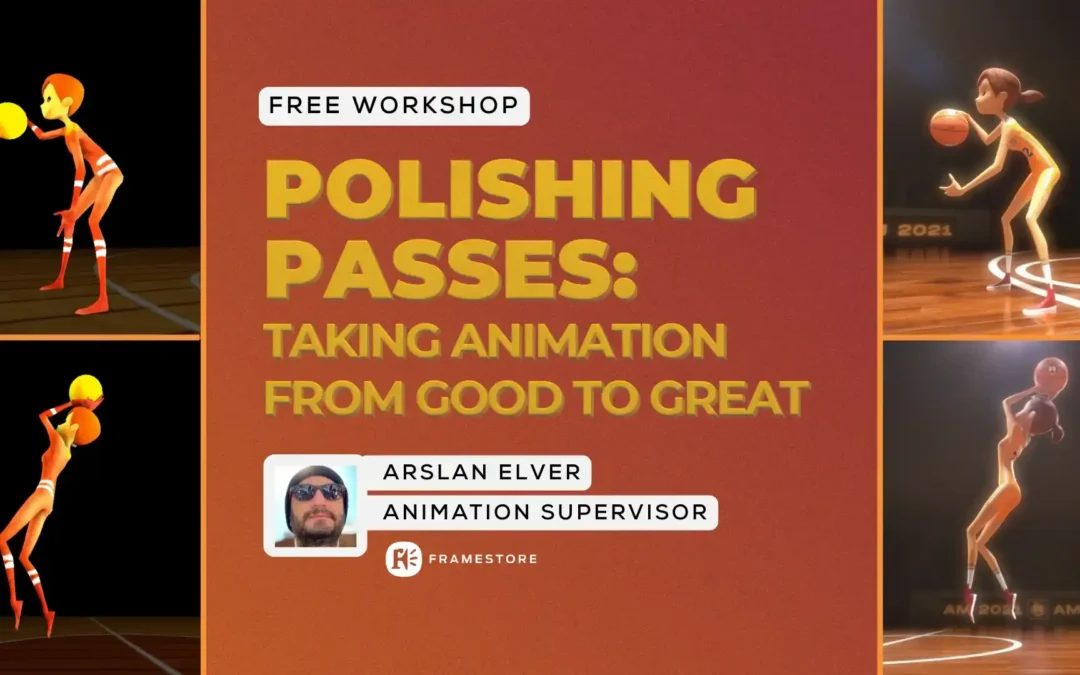
https://youtu.be/jzuxAmadcm8 Take your animation beyond the blocking stage and into a truly polished performance. In this recorded workshop, mentor and Framestore Animation Supervisor Arslan Elver breaks down how to refine spacing, clean up arcs, and elevate secondary...
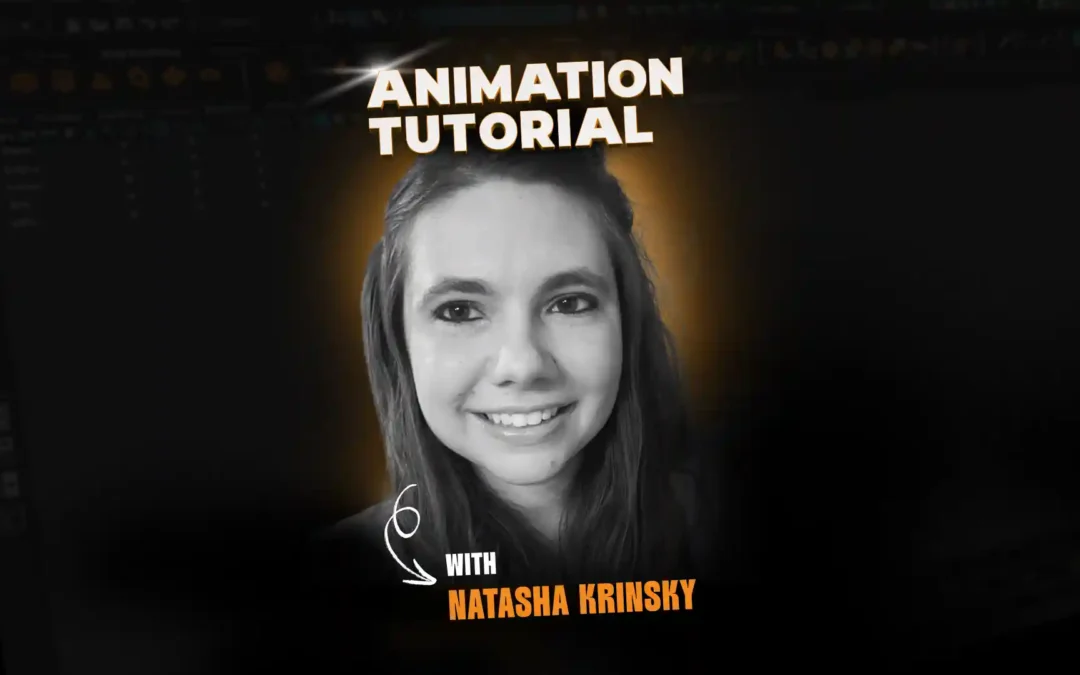
https://youtu.be/HPl0SPH710s In this tutorial, Animation Mentor Game Animation and Character Animation mentor Natasha Krinsky walks through how to use Autodesk MotionBuilder (aka “MoBu”) to clean up and assemble motion capture for games. She shows how to bring in a...
https://youtu.be/hbNrMAgpYbo When you’re deep in animation school or production, it’s easy to think your problems come down to “not being motivated enough.” In this talk, Animation Mentor alum and director Fernanda Frick breaks that idea apart and shows how much of...
https://www.youtube.com/watch?v=10h0UsKxCn4 In this presentation, animator and Animation Mentor mentor Nicole Gregory explains what a technical animator does, why the role is vital on game projects, and how tech animators collaborate with animators, programmers, and...
https://youtu.be/jzuxAmadcm8 Take your animation beyond the blocking stage and into a truly polished performance. In this recorded workshop, mentor and Framestore Animation Supervisor Arslan Elver breaks down how to refine spacing, clean up arcs, and elevate secondary...
https://www.youtube.com/watch?v=BJn_Jv-XgZg Learn the essentials of what makes a demo reel truly stand out in this focused workshop with DreamWorks Head of Character Animation Sean Sexton. You’ll walk through the 5 key things every strong show reel needs, along with...
https://youtu.be/Hh_rgOsFMwM You’ve spent countless hours animating your best shots but translating them into a demo reel that will make your work shine above the rest isn’t always a clear task. In this free workshop, Disney Animation Supervisor Ere Santos gives...
The field of animation is becoming more popular with each passing year. As the demand for unique and entertaining content grows, the demand for skilled animators is also on the rise. But there’s a catch: this sector is also remarkably competitive! That’s especially...
Just a few of the films on Shawn Kelly's IMDb page Shawn Kelly, Lead Animator at Industrial Light & Magic (ILM) and Animation Mentor Co-Founder educates us on why you need more creature animation in your demo reel and reminds us that we are all animators. Sit back,...