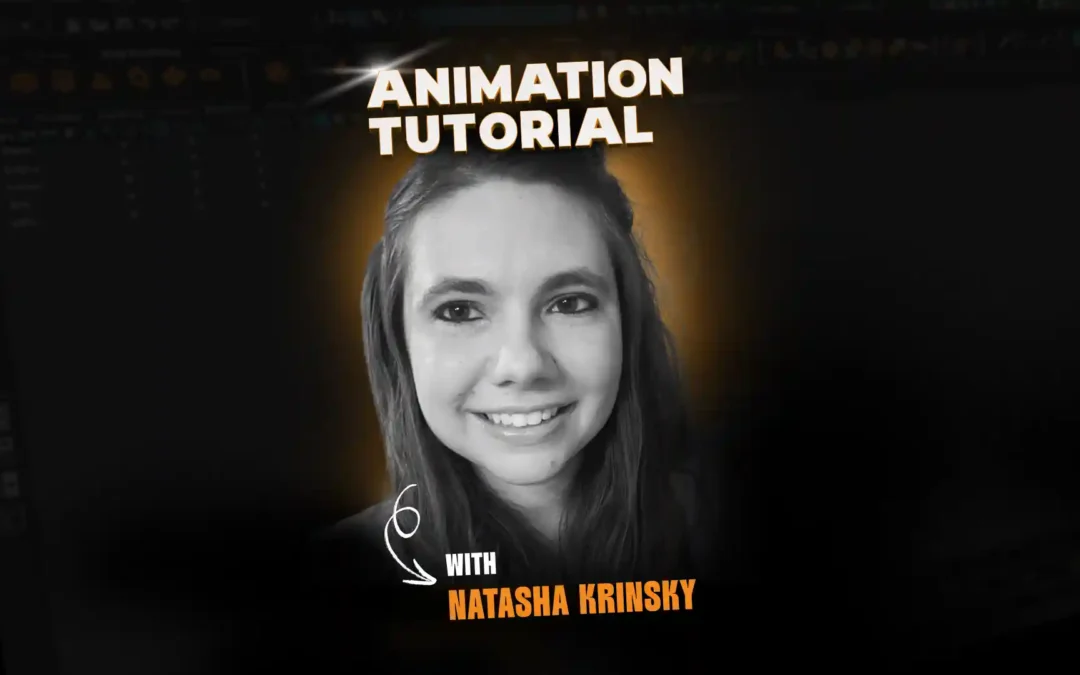

Small details like blinks and eye darts are the secret to bringing a character’s emotions and thoughts to life. In this tutorial, Animation Mentor instructor Natasha Krinsky explains how subtle eye movements and carefully-timed blinks impact realism, storytelling, and audience connection in 3D animation. Watch the full tutorial above.
Meet Natasha Krinsky
With experience on major game titles like Life is Strange, Madden, and Clockwork Revolution, Natasha brings a wealth of industry knowledge to her students at Animation Mentor. Her focus: helping animators master the art of nuanced, emotional performances. She mentors students in the Game Animation Program.
You can learn more about Natasha here.
Understanding Eye Motion in Humans and Animals
Natasha starts by breaking down how human eyes work. When we enter a space, our eyes dart to gather information before focusing on what matters—like finding the hostess at a restaurant. Our head often follows our gaze, and blinks frequently coincide with head turns and shifts in focus.
She compares this to birds and owls, who turn their whole heads instead of darting their eyes, emphasizing the need for species-specific reference.
Why Eye Animation Matters
Natasha highlights how the eyes are the “window to the soul.” Even with the rest of the face obscured, animators can convey complex emotions—confusion, joy, focus, sadness—just through eye motion and blinks. She shares student showcase examples:
- Concentration and confusion through slow blinks and searching eye motion.
- Emotional shifts like sadness or contentment, visible even without audio.
Acting Choices: Emotion Through Subtlety
She breaks down character shots to show how emotion is communicated:
- Happy, confused, or surprised performers adjusting eyelid shape, blinking pace, and eye direction.
- Using half blinks for casual characters, rapid blinks for nervousness, and extended holds for fear.
Technical Blinking Tips
Natasha provides her process for animating blinks:
- Most blinks take 3–5 frames down, a brief hold, and 2–4 frames to open.
- Top eyelid does most of the movement, with the lower lid catching up—offset eyebrows and eyelids for realism.
- Vary blink speed and amplitude based on emotional state (slow for fatigue or sadness, quick for excitement or nerves).
Animation Tricks: Darts, Pupil Dilation, and Layered Motion
Natasha demonstrates using half blinks, eye darts, and pupil changes for emotion and clarity. She recommends:
- Pupil dilation with a blink or dart for added style.
- Layering brow, eyelid, and eye motion to preserve “fleshy” movement.
- Holding gaze with minimal blinks to convey fear or intense focus.
Pro Workflow Advice
- Observe real life and reference footage for naturalistic eye motion.
- Adjust timing, spacing, and offset for greater subtlety.
- Experiment with species differences and nuances in performance.
Natasha’s takeaway: Eye acting is essential to conveying emotion in character animation. The smallest details—half blinks, gaze shifts, and pupil size—create deep connection and realism.
Want to be mentored by professional animators like Natasha?
At the core of Animation Mentor are our 3D Character Animation and Game Animation programs. Follow your animation dreams by learning from animators at studios like Disney, DreamWorks, Pixar, ILM, Riot Games, Netflix, and Blizzard!
Keep an eye on our social media platforms for more tutorials, live workshops, and new courses.