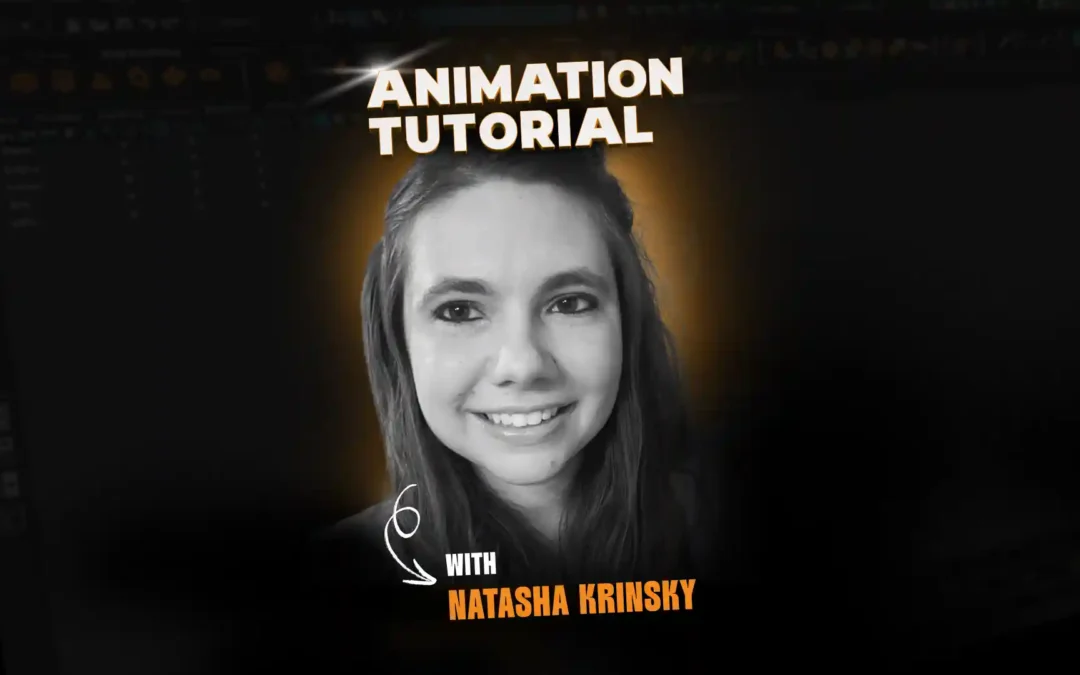

In this tutorial, game animator and Animation Mentor mentor Natasha Krinsky walks through how to make characters feel like they are truly battling strong wind. She focuses on selling an invisible force through body mechanics, acting choices, and simple secondary elements like flying debris.
Meet Natasha Krinsky
With experience on major game titles like Life is Strange, Madden, and Clockwork Revolution, Natasha brings a wealth of industry knowledge to her students at Animation Mentor. Her focus: helping animators master the art of nuanced, emotional performances. She mentors students in the Game Animation Program.
You can learn more about Natasha here.
Thinking of Wind as an Invisible Force
Natasha frames wind as similar to animating weight: your job is to show an external force the audience cannot see. Characters should look off balance, pushed, and resisted, as if something is constantly shoving them sideways or backward.
Because wind itself is invisible unless it carries snow, dust, or leaves, she suggests thinking of it like “the Force” from Star Wars—an unseen push your character is fighting against. This mindset shifts you away from a normal walk cycle and toward poses that only make sense if wind is present.
Starting Simple: A Paper in the Wind
Before jumping into full characters, Natasha recommends a paper-in-the-wind exercise inspired by Disney’s short Paperman. A single sheet of paper hits a character, flutters, sticks briefly, then whips away with twists and flaps.
Animating this convincingly forces you to study overlap, drag, and direction changes as the wind catches different edges. Even this simple object can have personality as it bounces off, hesitates, and darts away, making it a perfect warm-up for wind-driven motion.
Studying Film Reference: Snowstorm Walks
Natasha analyzes clips from Frozen where Elsa and Hans move through a blizzard. Elsa shields her face with her arms, squints against the blowing snow, and closes her eyes when a strong gust hits, all of which communicate discomfort and resistance.
Hans likewise blocks his face and leans into the storm, walking as if pushing through a heavy medium like water. Their movement never reads as a normal walk; every step acknowledges the extra effort of walking into wind.
Adding Fantasy: Airbending as Visible Wind
Using Avatar: The Last Airbender, Natasha shows more stylized examples where characters literally bend air. Aang uses gusts to do push-ups and blast enemies backward, with wind drawn as swirling energy so the audience can see the force.
In these cases, clothes and other characters react dramatically to the gusts, while the airbender often stays more stable, underlining that he is controlling the wind rather than being victim to it. This approach demonstrates how magic systems can turn invisible wind into a clear visual tool.
Gathering Live-Action Reference
Natasha then looks at live-action clips of people fighting strong wind: kids being knocked over, a girl blown out a door, and groups leaning hard into gusts on a street. Everyone is heavily off balance, with torsos pitched forward and knees bent, in ways that would cause a fall if the wind vanished.
She points out that steps are shorter and slower, feet search for grip, and sometimes the wind actually pushes people backward. These details show how critical it is to study real reference rather than inventing from memory.
Building a Wind Walk in Maya
For her own demo shot, Natasha chooses a reference of a man walking in extreme wind and nearly being lifted. In Maya, she uses the Stewart rig to recreate the motion with the video playing in the background.
Key decisions include:
- Keeping Stewart’s body leaned far forward the entire time.
- Keeping knees bent as if he is in a permanent crouch-walk.
- Squinting his eyes to sell the sting of wind.
- Adding hair that constantly blows in the wind direction.
She also mimics subtle foot behavior from the reference: twisting the lead foot to dig in for traction, sliding a foot back to regain balance, and nearly tipping over before catching himself, as if the wind is both knocking him down and holding him up.
Enhancing the Shot with Flying Debris
Because wind is invisible, Natasha suggests adding simple “debris” passes to clarify what is happening. She creates small spheres in Maya, animates them streaking across the frame in the wind direction, and uses motion blur so they read as fast-flying particles rather than obvious shapes.
By duplicating and offsetting these spheres, she fills the scene with bits of debris rushing past and occasionally close to camera. This secondary animation not only supports the idea of strong wind but also adds depth and energy to the shot.
Key Principles to Remember
Natasha wraps up with practical guidance for animators who want to tackle wind-driven shots:
- Treat wind like a constant external force your character must resist.
- Avoid “normal” walks; everything should feel off balance and effortful.
- Use facial acting—squints, flinches, eyes closing—to sell discomfort.
- Animate clothing, hair, and props as reactive elements that show the wind’s direction and strength.
- Consider extra visual cues like snow, dust, or debris when you need the audience to immediately understand the environment.
She notes that this kind of exercise is a strong fit for advanced body mechanics and acting assignments, and encourages students to embrace the challenge as a way to deepen their understanding of force and physicality.
Want to be mentored by professional animators like Natasha?
At the core of Animation Mentor are our 3D Character Animation and Game Animation programs. Follow your animation dreams by learning from animators at studios like Disney, DreamWorks, Pixar, ILM, Riot Games, Netflix, and Blizzard!