
Adam Johnson’s animation career trajectory has been fast, focused, and fueled by curiosity. After graduating from Animation Mentor in 2023, he quickly landed roles in both TV and VFX, working on projects like Obki, Paddington in Peru, and the 2025 How to Train Your Dragon. Now a 3D Animator at Framestore, Adam continues to sharpen his craft while navigating the unique challenges of animating iconic characters in high-stakes productions. In this Q&A, he reflects on the lessons he’s learned so far – and what’s helped him grow most on the job.
Getting Started as an Animator
Animation Mentor: Tell us about your animation journey. How did you get to where you are today?
Adam: I started with Animation Mentor in 2021, attending the Maya Animation course with mentor Cameron Pratt. Before that, I had no experience with animation and I’d been struggling to find a job since graduating from university with a theatre and creative writing degree.
I’d spent a few years working in the hospitality industry whilst trying to get a break as an actor/theatre writer. I was mostly serving coffees and toasting paninis. Auditions were very sparse, maybe one or two a year, and even when I finally got one, my heart wasn’t in it. I had a dance call for Hairspray the musical once – I can’t dance, I’d never had training as a dancer, and it went just about as well as you’d expect. I also had a brief and disastrous run as a scare actor in a zombie maze, pretending to be shot by audience members wielding plastic guns, and throwing myself around a concrete warehouse. It was around that time, laying on a dusty floor, pretending to have been shot for the seventeenth time that night, that I thought maybe I should try a different job.
I was heavily inspired by channels like Corridor Crew Digital and the Into the Unknown: Making Frozen 2 documentary. Animation appeared like the most magical job, creative, expressive, collaborative, and really really challenging, and Animation Mentor seemed the best place to learn.
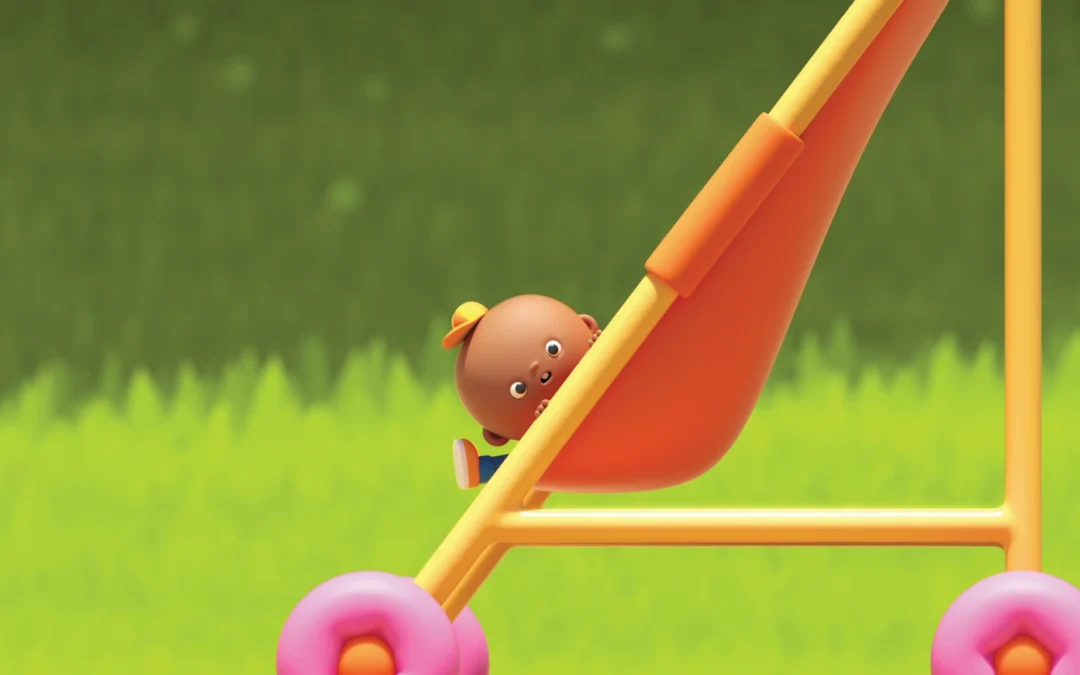
My mentors Beau Pratt, Cameron Pratt, Greg Whittaker, Raymond Ross, Dave Burgess, Mike Gasaway, Susan Dehdari and Jane Cassidy, carried me through the Animation Mentor courses. I got my first job during class 4 – it was a short film for Train of Thought Studios by Paul Kerr called Teddy on the Edge. After graduating from AM, I applied for jobs for a couple of months before getting hired as a Junior Animator at Ritzy Animation for half a year working for TV on season 3 of Obki. I had a lot of support from the team there, Dan Edgley and Charlie Batho the creators of Ritzy were awesome, and my lead Jordi Cidoncha was incredibly patient. TV animation felt like bootcamp for animators – you have to work at pace, which forces you to improve your workflow and make concise decisions. I think I grew a lot as an animator during my time on ‘Obki.’
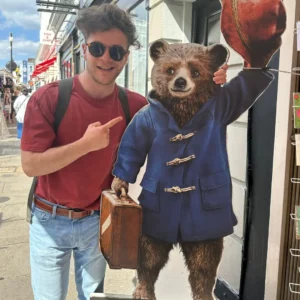
After a hiatus of about four months I was lucky enough to be hired by London Framestore as a Junior Animator for VFX and started on Paddington in Peru. VFX uses a layered workflow instead of stepped, focusing less on posing and more on the flow of movement, and realism. I had zero experience with VFX but I had a really fantastic Lead, Joe Lewis, who trained me up while I was working on my first few shots. I’ve been at Framestore for over a year now and I’ve had the opportunity to work on some really exciting projects with some wonderful people.
Working as a Framestore Animator
Animation Mentor: Can you tell us about one of the most memorable shots you have worked on?
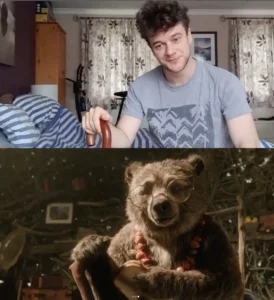
Adam: I was really lucky that my first shot on Paddington in Peru was a dialogue shot with Paddington; he’s just received a letter about his Aunt Lucy being ill and he’s trying to convince the Browns to help him. Usually, as a junior you’ll expect to start on shots that are pretty low intensity to ease you in. It was early in production and the team was quite small so I was very lucky that I was cast with this acting shot.
I shot a lot of acting reference for Paddington. We also had some footage of Ben Whishaw (the voice of Paddington) acting out the scene. Dailies was all about trying to craft the performances together into something that felt authentically like Paddington. It was tough figuring out what that was. Instinctually, we’re taught as animators to exaggerate performance for clarity, but with Paddington he’s very reserved and ‘British’ about things. There was a lot of scaling down keys and stripping back ideas. Less was definitely more with Paddington.
We also use a FACS system to animate faces at Framestore – I think this is pretty common for VFX but I hadn’t come across this before. There’s a good article about it here. It’s quite different to animating a face for feature animation. It’s a great system, essentially you have a single control for each key muscle in the face. At first though, it can seem very restrictive, but it means the expressions the animator crafts are grounded in reality, and it’s much harder to come off model.
Animation Mentor: What is one of the most challenging shots you’ve ever animated and what did you learn from it?
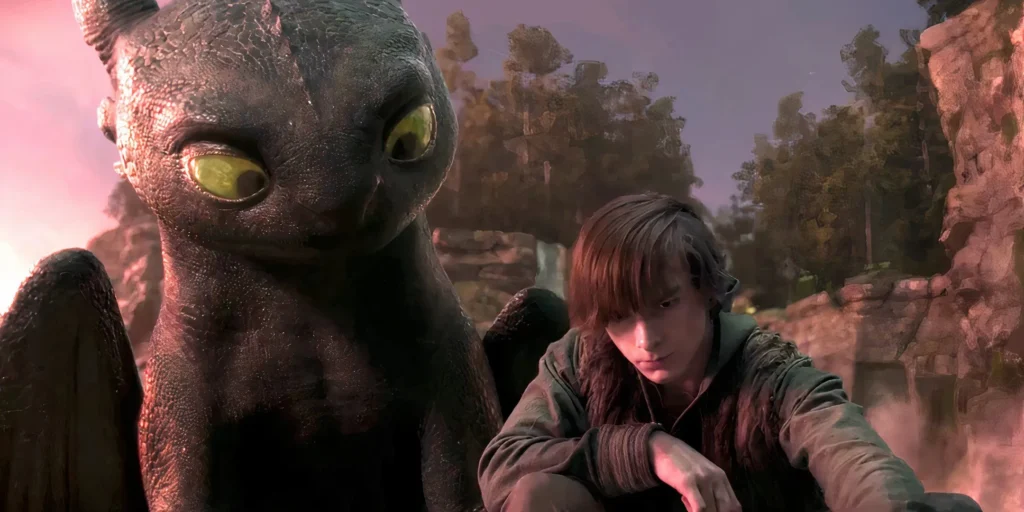
Adam: I had a shot in How to Train Your Dragon of Toothless in the arena, he’s just beaten the monstrous nightmare and now all the Vikings are trying to capture him. It’s a very chaotic scene with a lot of moving parts. Two Vikings get swiped by Toothless’ tail, and another Viking is riding on Toothless’ back like he’s a rodeo bull.
There were two main challenges with this shot. The first was trying to implement Toothless into the real world and getting the timing right to sell the hit. The Vikings being swiped by the tail had been filmed on set and are fixed in the plate. I couldn’t change their timing so I had to plan ahead, and make sure Toothless would hit them at the correct moment and still arrive at the final pose for the shot. It took some work to make it feel like the actors had really been bowled over by a giant dragon tail. The Viking riding on Toothless’ back was a digital double, so it was a lot easier to animate him for what the shot required.
The second challenge was trying to find authenticity in Toothless’ performance and creature mechanics. We looked at references of rodeo bulls and bucking broncos to get a foundation for the body mechanics, and that helped a lot, but ultimately the reference could only get me so far. Reference is really important in VFX, but when you’re animating a fantasy creature like a dragon it gets more complicated – it ends up as this collage of references of lots of different animals, and you have to stitch them together to find a dragon, and also a dragon that feels like Toothless.
We used a lot of cat, dog, lion, tiger references for Toothless. He stands on his hind legs at the end of my shot and I looked at bears getting on their hind legs, and horses rearing up. I ended up kind of feeling out the shot in Maya to try and find it, which takes a bit longer and requires more support form your Lead and Supervisor. The wings especially had to be made up from scratch. I worked on trying to find a nice flow through the shot and the director loved these big flowing movements in the wings, so that gave me something to work towards. The wings were difficult, especially as Toothless is spinning and flapping at the same time. But eventually I think it landed in a place that I’m pretty happy with.
Experience as an Animation Mentor Student
Animation Mentor: How did Animation Mentor help prepare you for the industry?
Adam: I went into the Animation Mentor courses with zero knowledge, so AM taught me basically everything. It taught me how to use Maya obviously, and the animation principles. I think one of the most important things it teaches though, is how to give and receive feedback.
I noticed that I was conditioned to receiving a lot of notes on a shot because of the feedback loop with mentors in AM. I think one of the hardest things to deal with, especially when you’re starting out, can be just getting notes on your work. It makes sense, because it’s a very vulnerable thing to do, you work very hard on your art, and express yourself through it, so for another person to come and give you constructive criticism, it can be demoralizing. But, developing a good mindset around this I think is super important.
No matter the animator’s skill level, everyone gets notes. It’s never personal and it’s always about pushing the shot to work for your client. I think it really helped me that by the time I got a job in the industry, AM had already taught me not to get precious about my work.
Advice for Animation Students
Animation Mentor: Do you have any advice for students who are looking for their first animation job?
Adam: I have a friend from AM that told me to just apply for everything and I think that was the best advice I heard. I think it’s good because it gets your work in front of recruiters and gets you out there. Best case scenario you actually get the job, worst case scenario you’ve made contact with a recruiter in the industry and you’ll start to become familiar to them.
Also, if you have the time and energy, personalize every cover letter. Research the company beforehand and figure out what their identity is. What do they pride themselves on? What is their workflow? What movies have they worked on? Who works there and do you have any contacts within their company already? Reach out to someone from that company and look interested, learn everything you can. Once you know more about the studio you’re applying to you can tailor your cover letter and hopefully your interview to show you are the perfect fit.
An example I can give is from my own experience when I had my Framestore interview. They had finished Guardians 3 the year before. I’d really resonated with the movie and got to talk to my interviewers about it – which showed I was keen, passionate about the industry, and that I’d done my research. I also knew that Framestore uses a layered workflow, so during my interview, I mentioned Ere Santos and his ‘golden movement’ approach to animating. I think they liked this attentiveness and I really believe it helped me get the job. I guess the lesson is to figure out how you can fit into their studio and try to showcase that in every way you can.
I also had a phase of going for a run before an interview as a way to release some tension. I wouldn’t recommend that though as I think it had the opposite effect – by the time it got to my interview I’d be very sweaty and a bit pumped. Not the best look. But it was the right idea. Interviews are scary, so if you can find an activity or something to center yourself beforehand, that’s always a plus.
Animation Mentor: Is there one thing every successful animator has in common? If so, what is it?
Adam: I think every animator I know is prepared to work incredibly hard. There’s always so much work to do and not much time to do it in, and that can be tough sometimes. Being really passionate about what you’re doing can help you get through that. And also curiosity – finding joy in looking at references, figuring out how something moves, the mechanics that go into real life creatures, that stuff can be really fulfilling and amazing to study and can give you this new appreciation for life and how it moves. I think hard work and curiosity can get you really far.
Adam Johnson in the Credits
• How to Train Your Dragon (2025)
• Paddington in Peru
• Fantastic 4: First Steps
• Obki, Season 3
…….and more!
See what other projects Adam has worked on on IMDB or connect with him on Instagram or LinkedIn.
Want to be mentored by professional animators?
Follow your animation dreams just like Adam did by learning from animators at studios like Disney, Pixar, ILM, Riot Games, and Blizzard! Get more information about Animation Mentor’s Character Animation Program or check out our Game Animation Program.