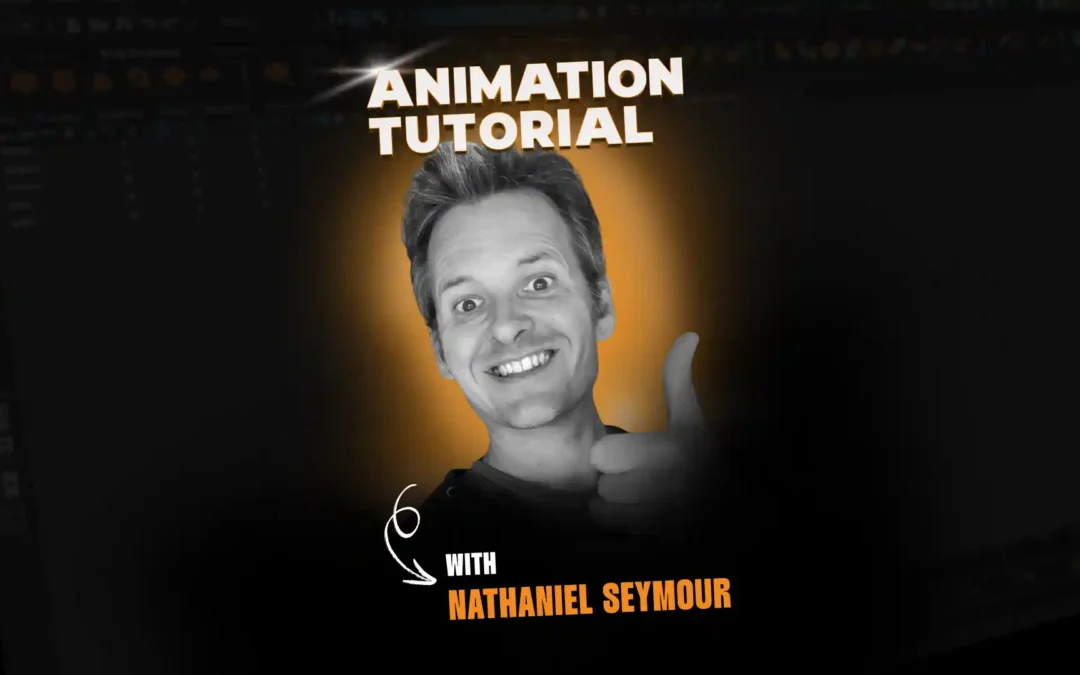

In this tutorial, Animation Mentor graduate Nathaniel Seymour explores how to animate clear emotion and storytelling without dialogue. Using his simple “Imp Rock” character and a giant flower, he demonstrates how gestures, facial shapes, timing, and environment interaction can communicate happiness, anticipation, and a violent allergy sneeze entirely through action.
Meet Nathaniel Seymour
Nathaniel is a 2009 graduate of the Animation Mentor Character Animation Program, with credits spanning visualization and character animation for film, TV, VR, and music videos. His work includes Dune: Part 1, Godzilla vs. Kong, Pokémon Detective Pikachu, and Clifford the Big Red Dog.
What Nonverbal Communication Means in Animation
Nathaniel defines nonverbal, non-dialogue communication as telling the audience what a character is thinking or feeling without having them say it out loud. Instead of dialogue, the animator relies on gestures, staging, facial expressions, and even environmental cues to deliver the message.
His example is intentionally simple: the character smells a huge flower, enjoys it so much that he wants another sniff, then realizes too late that it triggers his allergies and blasts backward in a sneeze. Verbally, the idea could be explained in a sentence, but the goal of the shot is to make the audience understand all of that just by watching the performance.
Why a Simple Character Helps
Nathaniel uses his “Imp Rock” character, whose face is extremely limited. The character has no eyes, ears, or nose, and most of the emotional performance has to come from the mouth shape and body movement.
That limitation is part of the lesson. When a character has fewer facial features, the animator must be much more intentional about every shape, especially the mouth, jaw, and body posture, because those elements carry almost all of the emotional information.
Start with Clear Video Reference
The tutorial builds from Nathaniel’s live-action video reference, where he physically acts out the beats of the shot. He smells the flower, reacts with visible happiness, leans in for more, then recoils as the sneeze starts building.
This reference gives him a roadmap for:
- The emotional progression of the shot.
- The timing of each story beat.
- The body mechanics of moving from one feeling to the next.
He treats the reference as a communication guide rather than something to copy mechanically. The point is to understand the intent behind each action, then push it further in animation.
Build the Happy Expression First
At the start of the Maya demo, the character has already smelled the flower once and is reacting to how good it feels. Nathaniel begins by resetting the mouth controls so the face is essentially neutral before sculpting the next expression.
He recommends this because constantly tweaking a face shape over and over can distort the controls and lead to awkward-looking poses. Zeroing out the expression first gives you a clean base and helps the next shape read more clearly.
From there, he creates a very large, exaggerated smile to show how much the flower delights the character. He adjusts:
- The jaw opening.
- The corners of the mouth.
- The puffing and shaping of the lips.
- The placement of the teeth so the expression still feels controlled.
Because the character design is cartoony and minimal, Nathaniel leans into strong exaggeration rather than subtle realism.
Moving into the Next Beat
Once the happy facial pose is established, the character needs to walk back over to the flower to smell it again. Nathaniel starts this phase by animating from the main body control first, then layering the rest of the body on top of that.
He describes his personal workflow as layered rather than strict pose-to-pose. In practice, that means:
- Blocking the main body movement first.
- Then refining the feet and planted contacts.
- Then adjusting the knees and other supporting parts.
- Then continuing to layer in more detail until the full shot is working.
He emphasizes that early blocking is only a starting point. Nothing is locked, and all timing and spacing can be adjusted later.
Keep the Footwork Grounded
As the character steps toward the flower, Nathaniel places attention on planted frames in the feet and knees so the movement stays grounded. He keys the feet carefully, including toe contact, to make sure the character blends naturally into the terrain.
He also notes that even with a very simple character, the knees should not feel rigid. Small knee adjustments keep the body from looking stiff and help the walk into the sniff feel alive.
Animate the Environment That Matters
A big part of the lesson is that nonverbal communication does not come only from the character. It can also come from the environment.
Nathaniel uses the giant flower as a second performer in the shot. Since the flower rig is less flexible and remains in FK, he prefers to animate the flower first, then adjust the character’s hand and body around it, because the character’s IK hand is easier to adapt afterward.
That choice helps the action feel intentional. The character is not just sniffing empty space; the flower moves into position and becomes part of the storytelling.
Transition from Joy to Trouble
After several satisfied sniffs, the emotional beat changes. The character suddenly realizes the flower is triggering an allergy reaction.
Nathaniel handles this transition by gradually removing the happy mouth shapes:
- The smile corners begin to relax.
- The jaw starts to open.
- The lips shift from a cheerful pose into a strained pre-sneeze shape.
- The body leans back to support the feeling that something is going wrong.
He focuses only on the essential controls first, especially the face and main body control, because those are what drive the audience’s understanding of the moment. Arms and other details can be addressed later.
Let the Face Drive the Body
One of the most useful ideas in the tutorial is that the facial expression dictates the rest of the body motion. As the mouth opens wider and the sneeze builds, the character’s torso rotates back and the pose becomes more extreme to support the facial action.
Even on a character with only a mouth for a face, this creates a readable chain of performance:
- Happiness from the smile.
- Curiosity and desire from the repeated sniffing.
- Alarm from the shifting mouth shape.
- Explosion from the full sneeze recoil.
That progression keeps the audience oriented without a single spoken line.
Polish and Final Presentation
In the later pass, Nathaniel shows the polished version of the shot. The character now takes cleaner steps, sniffs in rhythm, reacts to the allergy trigger, and sneezes violently backward.
He also composites the finished piece in After Effects, adding a background and smoke when the character lands. He further enhances the environmental interaction by scaling the middle of the flower during the sniff to show it compressing and then pushing it into a wilted, collapsed state after the sneeze.
That final flower deformation helps sell both the force of the sneeze and the broader idea of visual communication: the environment itself reacts, reinforcing what the audience has just seen happen.
Key Takeaways for Animators
Nathaniel’s tutorial offers a few strong principles for animating nonverbal storytelling:
- Start from clear intent, not just mechanics. Know exactly what the character is “saying” without words.
- Use simple, readable expressions rather than endlessly tweaking a pose into confusion. Resetting controls can help preserve clarity.
- Let one performance beat lead naturally into the next, so the audience can track the emotional shift.
- Use the environment as part of the acting whenever possible. A prop or set piece can communicate just as much as the character.
- Focus on essentials first. If the face and body core are working, the rest of the polish has something solid to support.
This tutorial is a reminder that strong animation does not always need dialogue to be expressive. With clear posing, smart timing, and purposeful interaction, even a character with almost no facial features can deliver a full comedic story beat.
Keep an eye on our social media platforms for more tutorials, live workshops, and new courses.
Follow us: LinkedIn | Instagram | YouTube
Want to be mentored by professional animators?
At the core of Animation Mentor are our 3D Character Animation and Game Animation programs. Follow your animation dreams by learning from animators at studios like Disney, DreamWorks, Pixar, ILM, Riot Games, Netflix, and Blizzard!